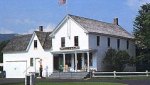
Glenn H. Curtiss Museum

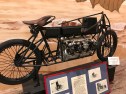
What a treat to find this little museum tucked away in the Finger Lakes wine country of New York!  Located in Hammondsport, NY, on Keuka Lake, it contains living history of the many motorized adventures of Glenn Curtiss from early motorcycles to airplanes.  I believe the man was a daredevil, in fact, in 1907 he was recognized as the fastest man on earth by attaining the speed of 136.4 MPH on his V-8 powered motorcycle.  Not that impressive by today’s standard, however picture a V-8 engine strapped to

a bicycle frame and you get the idea of what a scary ride that must have been.

My central fascination was with the large collection of early Curtiss airplanes. After blowing away the land speed record in 1907, he followed it up with flying his “June-bug” in 1908 and earned pilot’s license #1. Not to be confined to mere land, he mastered landing on water which later began an association with the US Navy. In fact, he is recognized as the father of Naval Aviation.

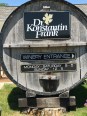
Hammondsport is also home to the Dr. Frank Winery, producers of one of my favorite white wines, Salmon Run Chardonnay.  We had a tour, sampled some of their varietals and boxed up a case of new wines to try.

On the northern edge of Lake Keuka, is the village of Penn Yan made famous by its boat and canoe building.  If you think the name is odd, it was a compromise of Penn to honor Pennsylvanians and Yan, short for Yankees.  Boat building ceased operations is 2001 but the town is still a vibrant community and home of Birkett Mills processing buckwheat since 1797, over two hundreds years of delivering a quality product to the marketplace.  Who knew?

Leave a comment

Filed under Uncategorized

Golf in February

Yes, it is possible, but if you live in the frozen latitudes, you’ll have to fly a bit south to find open ground to play on in February.

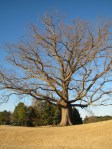
Golf usually calls for warmer climes like Florida or Arizona or California but the distance requires too much travel time.  For my taste, the best bet is the Carolina’s. While the grass may still be brown (winter dormant) the play is exceptional and uncrowded. You may even catch an amazing sight or two like this magnificent tree waiting for spring to arrive. A perfect example of the tree of life in winter.

Leave a comment

Filed under Uncategorized

NOLA

Nola has it’s own special space once you have made a visit to this remarkable city. No, it’s not the name of a jazz singer or a lost love, it is short-speak for New Orleans, Louisiana. Still on the mend after Hurricane Katerina’s devastating blow in 2005, the city is alive and well and entertaining locals and tourists alike.

I arrived late in the afternoon and was instantly impressed by the architecture of the French Quarter. Visiting in March, it’s difficult to imagine how steamy the second and third stories of these buildings can get in the summertime’s oppressive heat and humidity.  Everything about their design works to capture the coolness of the lower levels and have it waif throughout the buildings upper floors. Usually, dormer windows are only used to provide circulation and ventilation.  The covered porches or galleys again are designed to protect occupants from the elements.

A stroll down Canal Street towards the Mississippi River is a must. One cannot imagine the enormity of the river without standing alongside it’s mighty currents. The commercial river traffic shuttles massive amounts of cargo up and down from the port of New Orleans. It is still possible to take a short ride on a paddle wheel boat to get a up close look at the commerce. Viewing the Domino sugar factory from the water provides a sweet reminder of the slave labor used to grow sugar cane in this region.

Leave a comment

Filed under Uncategorized

Ephrata Cloister

The hearty souls that came to Pennsylvania in the early 1700’s did so on the promise that William Penn’s religious freedom experiment would bring them ever lasting peace. Thousands of German, Swiss, Dutch and French Protestants escaped religious persecution by journeying to Pennsylvania.  My ancestors Hans Michael and    Elizabeth Schule were among the first to join the new outpost known as Ephrata. They supported the nearby Cloister as householders and were  well acquainted with Conrad Beissel, its founder.

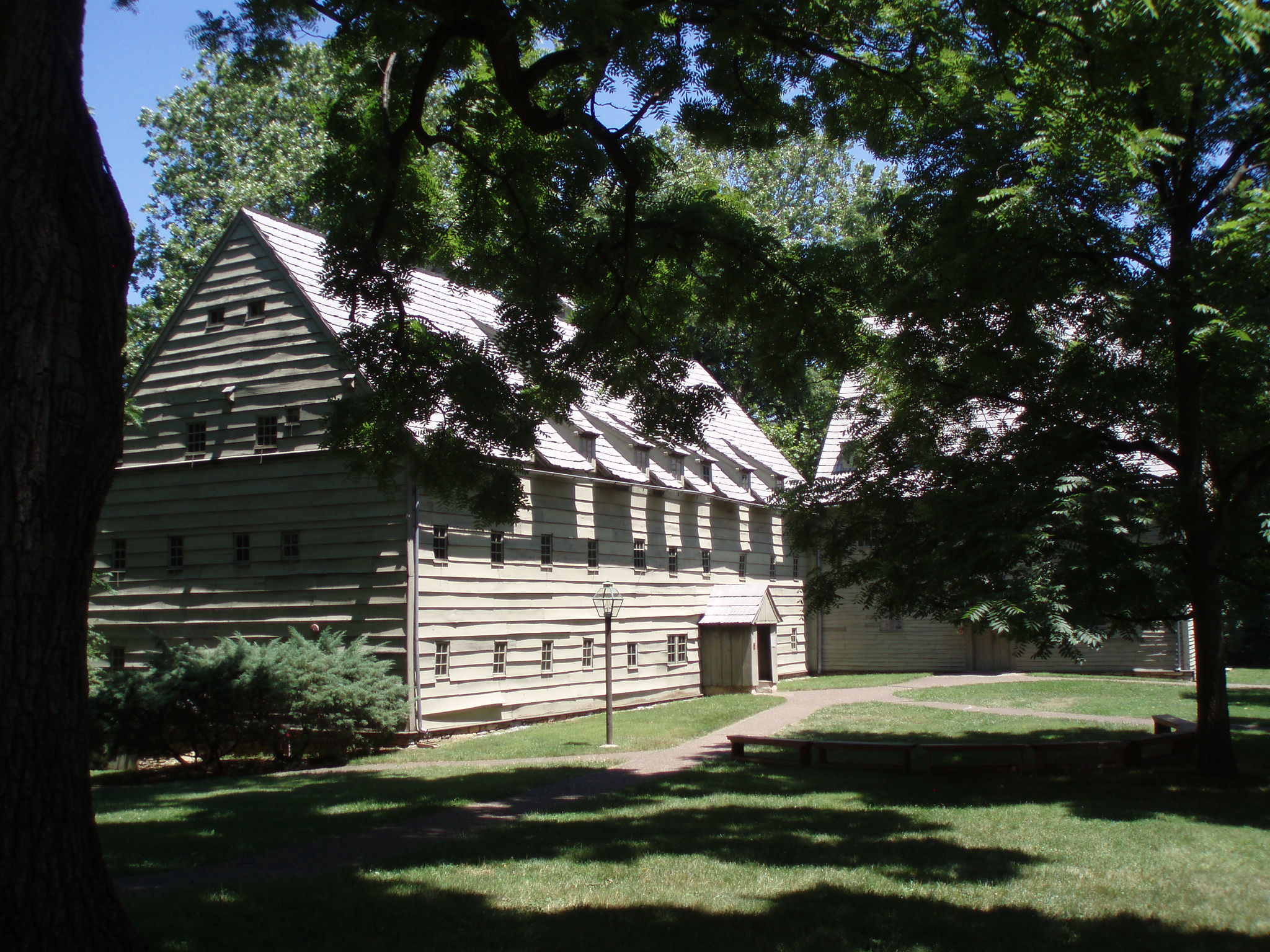
Many of the original buildings are still here today; the Saron (Sister’s House) and Saal (Meetinghouse) dominate the grounds of the Cloister.  From   1732 to 1750, nearly 300 individuals joined Beissel at Ephrata. Celibate members lived in either the Sister’s House or the Brother’s House and the   Householders lived on nearby farms contributing funds, products and assistance to the members of the Cloister.

They were an industrious community operating a printing press, recording musical compositions and practicing German calligraphic writing called Frakturschriften. The community became known for its charity, helping new settlers build homes, caring for the poor and elderly, operating a school for area children and offering free lodging to guests. During the winter of 1777-1778 the Cloister was the site of a Revolutionary War military hospital.

Both Hans and Elizabeth are buried at God’s Acre cemetery at Ephrata; both in unmarked graves.

Leave a comment

Filed under Uncategorized

Howard Hughes’ Constellation in Maine

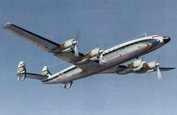
Flying into the Auburn-Lewiston Airport in Maine carries with it a look back to the grandeur of the first transcontinental airplanes. Long the dream and focus of local resident Maurice Roundy, two of his historic planes have been acquired by Lufthansa  historic flight foundation, Deutsche Lufthansa Berlin-Stiftung (DLBS),  to restore the aircraft to airworthy condition. One is still sitting on the tarmac and its sheer size as compared to the other general aviation planes is immediately striking. The sleek silver airplane with its 150-foot wingspans and tri-tail design are unlike anything on the ground or in the sky today.

This extraordinary airship traces its roots back to 1939 when Howard Hughes unveiled a plan for faster non-stop passenger service coast to coast.     The Constellation, or Connie as it was affectionately called, would enable his TWA airline to lead the way in air travel. Lockheed produced the plane from Hughes rough sketches and made it the most elegant aircraft of the time. 

As soon as the plane has been completely restored, it is destined to be relocated to Europe. If you want to get a glimpse, don’t delay!

1 Comment

Filed under Uncategorized

Airstrip on Mt. Washington?

The top of Mt. Washington in the rugged White Mountain of New Hampshire is hardly a hospitable location for casual traveler and an even more unlikely location for an airport.  It was however, transformed into a makeshift landing site in the spring of 1947 for Carmen Onofrio. Mr. Onofrio was the airport manager, mechanic and a local air enthusiast when he was asked if landing on top of the “rock pile” could be accomplished.  Changing out his rubber tires for a pair of skis and after a few hair-raising attempts to get the approach just right, he successfully landed his 1941 J-3 Cub .

In cooperation with the US Army Signal Corp and Northwest Airlines, the mission was set in motion to test instruments in near arctic conditions. Beginning on March 12, 1947, Mr. Onofrio made a total of 42 flights to the top delivering men and equipment in pursuit of air safety. Using the Glen House as a staging area, a record 14 flights were made in a single day.

There is no question that Mr. Onofrio had nerves of steel and a strong sense of adventure. No one has ever made another attempt at the summit.

Leave a comment

Filed under Uncategorized

Plymouth Notch, VT

General Store

General Store

Coolidge Historic Marker

Coolidge Historic Marker

Erin, Holly and I met for lunch at the Long Trail Brewery in Bridgewater, VT at noon to check out the locally made Long Trail brews and catch up on each others latest news. Long Trail is located just west of Woodstock on Route 4 just a few hundred feet from the turn to Route 100 south. Blackberry Wheat and Belgian White Ale (our favorites) were delivered to our table along with sandwiches.  Before we left, we checked out the self-guided tour of the brewery and the girls decided on case purchases to take home. Holly headed back to Thetford and Erin and I took a side road up to Plymouth Notch on Route 100 to locate the birthplace of President Calvin Coolidge.

In less than 6 miles we arrived at the quaint village of Plymouth that has been lovingly restored. It is a page out of summer of the 1920’s, only the original residents are now long gone. We found President Coolidge’s birthplace to be intact right down to the original furnishings.  His childhood home, general store, post office, barns, cheese factory and church still grace the street that Coolidge learned his early lessons. He was vacationing here in the summer of 1923 when he received word that President Warren Harding had died. The call came in the wee hours of the morning and the only phone in town was located in the general store.  The storekeeper refused to answer the call and eventually someone from the telegraph office in nearby Bridgewater was sent up to Plymouth to arouse the then Vice President Coolidge. Within a few short hours, he was sworn into office as the 30th President by the local notary public, his dad, John Coolidge. When he later arrived in Washington, he was sworn into office again by a Federal Judge.

The State of Vermont acquired the premises from decentants of the President in 1968 and every effort has been made to preserve its authencitity. The hill farm countryside remains as it did over 100 years ago. The backroads and byways always hold more treasures than we could ever imagine. Coolidge was in office during the roaring 20’s but his roots were far from the excitment of the cities, his solace and final resting place was in returning to his home in Vermont.

Leave a comment

Filed under Uncategorized

Owl’s Head Transportation Museum, Rockland, ME

Flying up the Maine coast can be an adventure all of itself but when you add a trip back in time with a visit to the Owl’s Head Museum it becomes awesome in a hurry! The museum was conceived by Tom Watson, former president of IBM and James Rockefeller, Jr. as a place to house their separate collection of “toys.” They put their heads together and their dream came to life with the formation of a non-profit trust. In just a few short years, 60+ acres of land was acquired adjacent to the Knox County Airport in Rockland, Maine to house their prized possessions. A brand new facility was constructed and the museum opened in 1976. More than 100 “pioneer-era” aircraft and automobiles are on permanent display. Motorcycles, carriages, bicycles and engines are but a few of the additions. It is amazing to me that under one roof you can inspect a replica of the Wright Model B, a vintage Harley and a 1929 Rolls Royce. This is a first class operation complete with a restoration hanger, library and education center. Rides in a 1933 Waco or 1941 Stearman Biplane await just outside the door. What could be more exciting than a view of Penobscot Bay from the air? Special events are scheduled throughout the summer season and into the fall including antique auto auctions. I hope you will make plans to visit and spend some time. History comes to life everyday at Owl’s Head! http://www.ohtm.org

1 Comment

Filed under Uncategorized

Saint-Gaudens National Historical Site Visit

Deciding what to do on a partly overcast summer Sunday afternoon, I headed south along the Connecticut River to Cornish, NH. Cornish, once a hot-bed of budding painters, sculptors, illustrators, novelists, composers, and musicians is a small community along the banks of the Connecticut River about a half hour’s drive from Hanover. My destination was the Saint-Gaudens National Historic Site and the only National Park in NH. Once the private residence of Augustus Saint-Gaudens, the grounds and various buildings now house many of his original works. The Farragut Monument, his first commissioned public monument, commemorates Civil War Admiral David Glasgow Farragut and the Shaw Memorial commemorating the Massachusetts 54th Regiment of African American Volunteers showcase his artistic legacy. Old-fashioned perennials grace the property and pine and hemlock hedges encase a formal setting for additional sculpture pieces.

The Trustees of the Park have arranged with various musical artists to perform on Sunday afternoons in the “Little Studio” building. Pending fair skies, visitors bring lawn chairs and picnic on the grounds. The season opening event featured Aine Minogue on Celtic harp and vocals and Eugene Freisen on cello. The studio was filled to overflowing with enthusiastic guests and many more spilled onto the lawns to enjoy two hours of sweet melodic tunes.

After spending an enjoyable afternoon at Saint-Gaudens, I headed south along Route 12A towards Windsor, VT. and home to the longest covered bridge in the United States, spanning an amazing 449’ 5”. The Cornish-Windsor Bridge, built in two sections as a lattice truss structure, is the longest two span bridge in the world and it has been recognized on the National Register of Historic Places.

Just after crossing this enormous bridge, a right hand turn brings you onto Windsor’s Main Street. In a block or so look for the Firehouse Museum also known as the Cornish Colony Museum, home of many works of Maxfield Parrish. I had just enough time to have a quick look around and was delighted to learn that this summer’s feature is “The Artistry of the Women of the Cornish Colony.” Works by Bessie Potter Vonnoh, Helen Mears, Frances Grimes and Edith Mitchill Prellwitz are among those on display.

The afternoon flew by and I was enriched beyond expectation, well worth a repeat visit or two!

Leave a comment

Filed under Uncategorized

A River Runs It! Get With The Flow

A RIVER RUNS IT-GET WITH THE FLOW!
For many years I have been actively working with a local land trust to select and preserve significant properties with conservation easements. There are many challenges to good conservation work, not the lest of which is finding the resources to fund the transaction cost to protect the land.
Last evening I attended a session sponsored by the Connecticut River Joint Commission, whose job it is to study the Connecticut River, to hear the science behind river protection. The study of rivers is called Fluvial Geomorphology and by the end of the evening I  had a new appreciation for the scientists that spend their lives studying the rivers. The fundamentals of river behavior and the general principles of fluvial geomorphology are sedimentation, hydraulics, restoration, fish habitat improvement, riparian grazing management, and streambank erosion. Problem solving techniques for watershed management, riparian assessment, fish habitat structure evaluation, stream restoration, non-point source pollution and the integration of ecosystem concepts into watershed management are the outcomes of this kind of serious study.
As you can well imagine, it turns out that water will make its own path regardless of how man has tried to train  or confine it to new barriers. The ripple effect of changing the flow of water at one point works its way back to the point of original tampering. It has been estimated that over one third of the Connecticut River’s 85 mile stretch from Pittsburg, NH to Dalton, NH has been manipulated by man. In the 1800’s, when logging was the primary industry, the river was straightened to prevent log jams. Water powered mills popped up to take advantage of no cost power. The railroads also played a part in moving the water’s course to reduce the cost of building bridges over meandering streams.
Slowly, over time, the river has worked to regain control over its original path. Seems we could all take a lesson from the fluvial geomorphologists. Let’s get with the flow and stop operating our lives from a place of fear, shake it up, let’s have some fun!
For many years I have been actively working with a local land trust to select and preserve significant properties with conservation easements. There are many challenges to good conservation work, not the lest of which is finding the resources to fund the transaction cost to protect the land.
Last evening I attended a session sponsored by the Connecticut River Joint Commission, whose job it is to study the Connecticut River, to hear the science behind river protection. The study of rivers is called Fluvial Geomorphology and by the end of the evening I  had a new appreciation for the scientists that spend their lives studying the rivers. The fundamentals of river behavior and the general principles of fluvial geomorphology are sedimentation, hydraulics, restoration, fish habitat improvement, riparian grazing management, and streambank erosion. Problem solving techniques for watershed management, riparian assessment, fish habitat structure evaluation, stream restoration, non-point source pollution and the integration of ecosystem concepts into watershed management are the outcomes of this kind of serious study.
As you can well imagine, it turns out that water will make its own path regardless of how man has tried to train  or confine it to new barriers. The ripple effect of changing the flow of water at one point works its way back to the point of original tampering. It has been estimated that over one third of the Connecticut River’s 85 mile stretch from Pittsburg, NH to Dalton, NH has been manipulated by man. In the 1800’s, when logging was the primary industry, the river was straightened to prevent log jams. Water powered mills popped up to take advantage of no cost power. The railroads also played a part in moving the water’s course to reduce the cost of building bridges over meandering streams.
Slowly, over time, the river has worked to regain control over its original path. Seems we could all take a lesson from the fluvial geomorphologists. Let’s get with the flow and stop operating our lives from a place of fear, shake it up, let’s have some fun!

1 Comment

Filed under Uncategorized